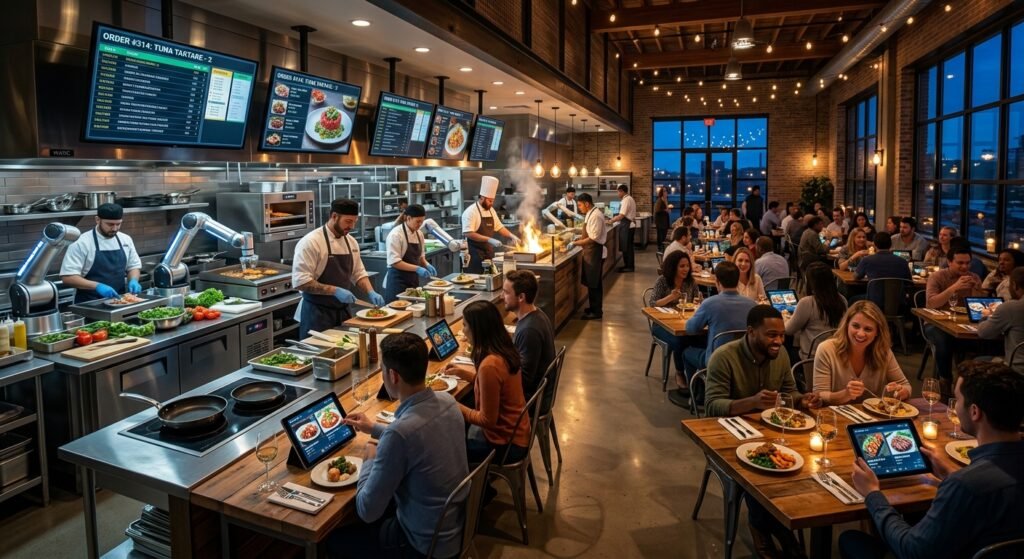
The culinary industry is undergoing a permanent transformation. While warm hospitality and exceptional flavors remain the heart of any successful eatery, the channels through which consumers discover, order, and experience food have changed dramatically. Exploring how digital platforms are shaping the future of restaurants reveals an ecosystem where cloud-based management systems, machine learning algorithms, and seamless delivery networks are no longer luxury additions—they are essential infrastructure.future of restaurants
To remain competitive in a digital-first marketplace, operators must look beyond traditional front-of-house operations. From AI-driven inventory tracking to personalized mobile app experiences, adopting integrated tech stacks directly improves profit margins, streamlines back-of-house workflow, and aligns with modern diner expectations.
Key Takeaways
- Unified POS Ecosystems: Modern Point-of-Sale platforms act as central hubs, automatically synchronizing online ordering, kitchen management systems (KMS), and real-time inventory.
- Data-Driven Personalization: Restaurant apps and third-party platforms collect guest preference data to tailor marketing campaigns, dynamic menu suggestions, and loyalty rewards.
- Off-Premise Revenue Expansion: Integrated online ordering and third-party delivery networks allow restaurants to scale sales well beyond physical seating limits.
- Automated Kitchen Workflow: AI kitchen analytics and predictive inventory forecasting reduce food waste, control labor costs, and accelerate ticket fulfilment times.
1. Transforming Guest Discovery and Omnichannel Ordering
The future of restaurants modern dining journey almost always starts online. Whether a customer is looking for a sit-down meal or a quick takeaway, digital platforms serve as the primary discovery channel.
Digital Discovery (Search/App) ➔ Seamless Web/Mobile Order ➔ KMS Routing ➔ Automated Fulfillment (Dine-in / Delivery)
The Power of Direct Online Ordering
While third-party delivery apps offer broad consumer reach, direct-to-consumer digital ordering platforms allow restaurants to retain customer data and avoid high commission fees. By providing an easy, text-based online menu on their native websites, operators keep control over the guest experience while driving higher order values.
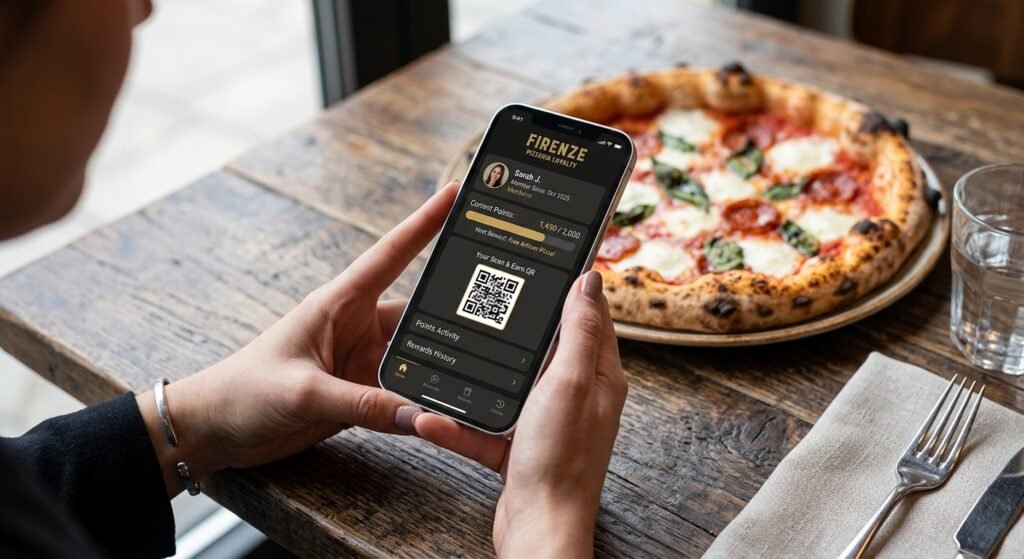
Smart Loyalty Programs and Retargeting
Digital platforms capture valuable diner insights—such as favorite items, visit frequency, and average spend. Restaurants use this data to trigger automated SMS and email reminders, offering personalized incentives that increase guest lifetime value.
To learn how algorithmic search platforms automatically aggregate local dining data and evaluate restaurant listings, read [Internal Link: Insert relevant internal URL here with anchor text].
2. Optimizing Back-of-House Operations and Inventory Control
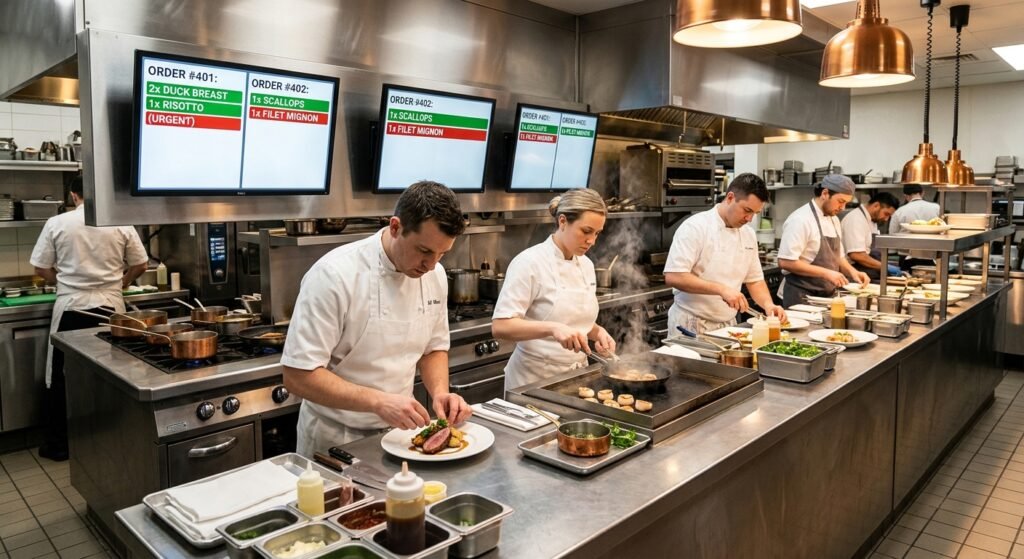
Beyond customer-facing channels, digital platforms are driving immense efficiency gains inside kitchen walls. High operating costs make precise back-of-house management critical for survival.
Predictive Inventory and Reduced Food Waste
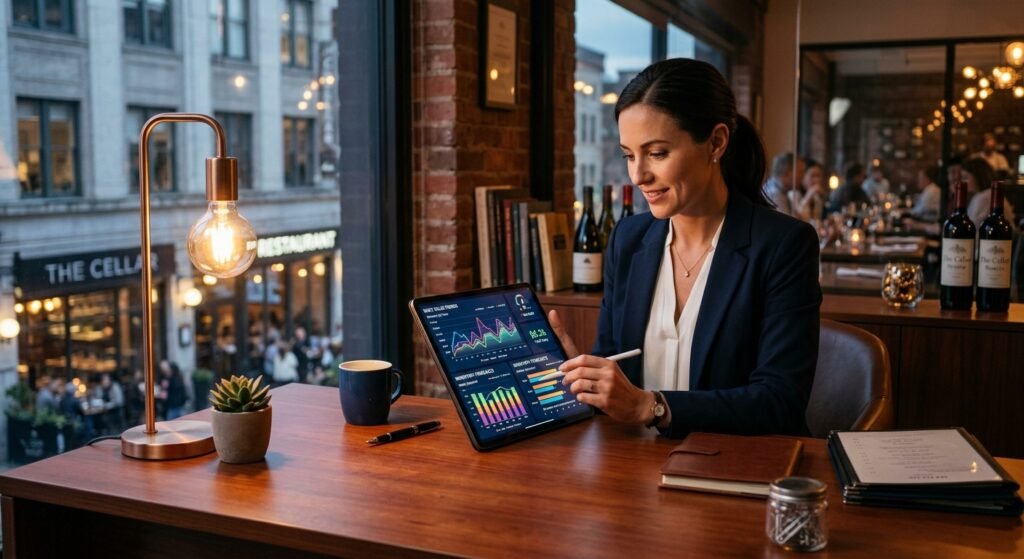
Advanced inventory management software connects directly with POS systems to track ingredient usage per dish down to the gram. AI-driven predictive analytics forecast weekly demand based on historical sales trends, local weather, and day of the week—preventing costly over-purchasing and organic food waste.
Integrated Kitchen Display Systems (KDS)
Paper tickets are rapidly being replaced by digital KDS monitors. These platforms organize incoming orders from multiple channels (dine-in tablets, mobile apps, and third-party delivery drivers) into a single, prioritized queue, drastically reducing ticket times and kitchen errors..
3. The Role of Artificial Intelligence in the Future of Restaurants
Artificial Intelligence is transitioning from an experimental tool into an essential business driver for forward-thinking operators.
| AI Application | Operational Function | Business Impact |
| Dynamic Pricing Algorithms | Adjusts delivery/menu pricing based on peak demand periods | Maximizes revenue margins during rush hours |
| Automated Voice Ordering | Manages phone reservations and drive-thru order taking | Reduces labor strain and eliminates missed phone orders |
| Predictive Staff Scheduling | Forecasts hourly foot traffic to build optimal shift rosters | Prevents overstaffing while protecting service quality |
According to recent technology landscape reports from industry associations, over two-thirds of restaurant operators confirm that adopting smart digital tools has measurably improved operational efficiency.
For official industry tech adoption metrics, labor benchmarks, and foodservice technology research, review reports from the [External Link: Insert high-authority external URL here with anchor text].
Conclusion
Understanding how digital platforms are shaping the future of restaurants makes one thing clear: technology and hospitality now go hand in hand. Digital channels do not replace authentic dining experiences—they support them by eliminating operational bottlenecks, lowering food waste, and giving guests effortless ways to engage with their favorite brands. Operators who embrace integrated tech stacks, clean digital menus, and data-driven management will lead the industry into its next era of growth.
Frequently Asked Questions (FAQs)
What is the most important digital platform for a new restaurant?
A robust, cloud-based Point of Sale (POS) system integrated with a fully responsive Google Business Profile and an indexable native website menu forms the foundation of any modern restaurant tech stack.
How do digital ordering platforms affect restaurant profit margins?
While third-party platforms charge commissions for guest acquisition, native direct-ordering platforms allow restaurants to capture full-margin sales and collect direct customer data for repeat marketing.
Will automation replace human staff in the future of restaurants?
No. Industry consensus shows technology augments human labor rather than replacing it. Automated systems handle repetitive tasks—like taking phone orders, tracking stock, or routing tickets—allowing staff to focus on guest hospitality.