The modern restaurant scene is undergoing a dynamic transformation, driven largely by the rise of fusion cuisine. Today’s dining public is increasingly adventurous, moving away from rigid traditional recipes in search of unexpected, multidimensional taste profiles. Local chefs are leading this evolution by crossing culinary borders, taking native techniques from one culture and seamlessly weaving them with the ingredients of another.
This culinary cross-pollination is more than just a passing food trend; it represents a fundamental shift in how we experience culture on a plate. From Japanese-Italian Itameshi pasta bars to French-Vietnamese bistros and Mexican-Korean street food trucks, cross-cultural cooking is redefining the modern dining landscape.
Key Takeaways
- Cultural Harmony: Successful fusion cuisine respects the heritage of both origin cultures while creating a completely novel flavor profile.
- Technique Meets Ingredient: Chefs often combine complex cooking methods (such as French sauce-making or live-fire grilling) with bold global spices and fermented staples.
- Driven by Global Mobility: Migration, international travel, and digital food culture have accelerated consumer demand for borderless dining experiences.
- Hyper-Local Adaptation: Local culinary artists adapt global concepts using seasonal, locally sourced produce to keep dishes fresh, sustainable, and grounded.
The Evolution of Cross-Cultural Dining
While blending traditions is not entirely new—trade routes have exchanged spices for millennia—the modern rise of fusion cuisine differs in its precision and intentionality. Early iterations in the late 20th century were often criticized for combining random ingredients without deep culinary logic. Today’s wave, often described by industry experts as “borderless cuisine,” focuses on deep storytelling, technical mastery, and cultural respect.
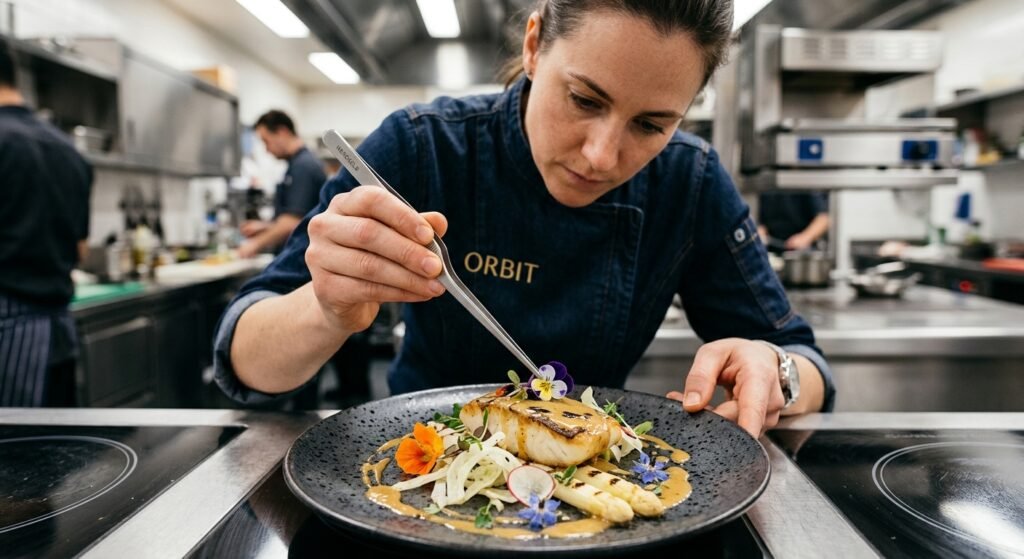
Local culinary pioneers are no longer simply throwing exotic spices into classic dishes. Instead, they study the chemical and structural harmony between cuisines. For instance, combining the umami richness of Japanese dashi with the creamy, emulsion-based techniques of classic French gastronomy produces sauces that offer depth without heavy calorie loads.
How Local Chefs Master Flavor Pairings
To execute cross-cultural dishes successfully, culinary creators balance contrast and familiarity. If a dish is entirely unfamiliar, diners can feel overwhelmed; if it is too safe, it loses its adventurous edge.
1. Identifying Shared Flavor Bridges
Chefs look for foundational ingredients shared across distinct regions. For example:
- Acid & Fermentation: Mexican lime and chili marinades mirror the sour-spicy balance of Thai Tom Yum broths.
- Umami Fillers: Italian Parmigiano-Reggiano and Japanese fermented miso share similar amino acid profiles, making them natural companions in hybrid risotto dishes.
2. Upgrading Street Food Classics
Local eateries frequently use street food as a canvas for high-end experimentation. Gourmet ingredients like slow-smoked brisket, truffle oils, or sustainably sourced caviar are introduced to everyday formats like tacos, bao buns, and flatbreads. This approach delivers accessible luxury to diners seeking casual yet memorable meals.
To discover innovative eateries near you that are experimenting with these exact techniques, check out [Internal Link: Explore Foodimine’s guide to trending local restaurants and culinary hot spots].
Trending Fusion Styles Captivating Diners
Several specific cross-cultural pairings have emerged as dominant forces across modern menus:
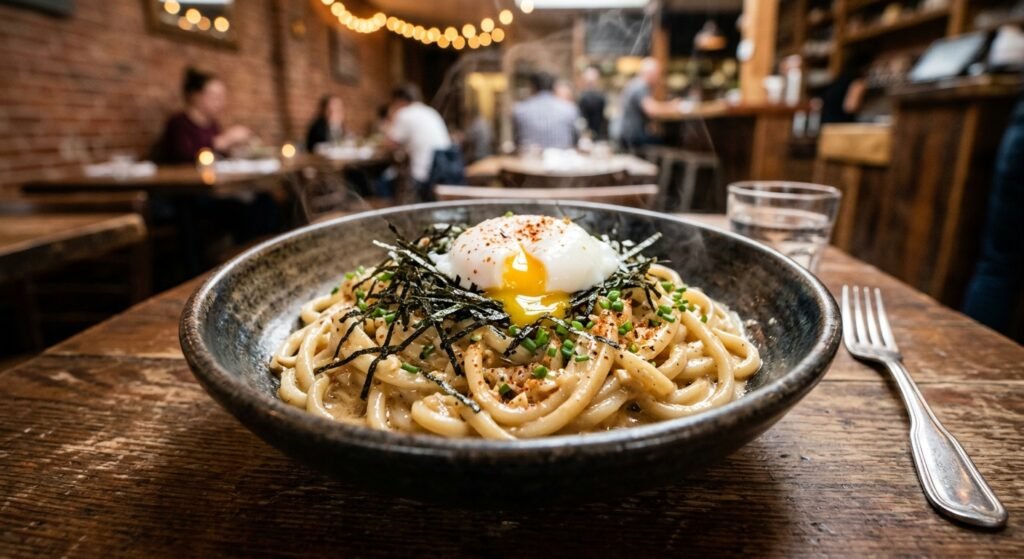
- Itameshi (Japanese-Italian): Spaghetti paired with mentaiko (spiced cod roe), soy-sauce butter glaze, or white miso carbonara.
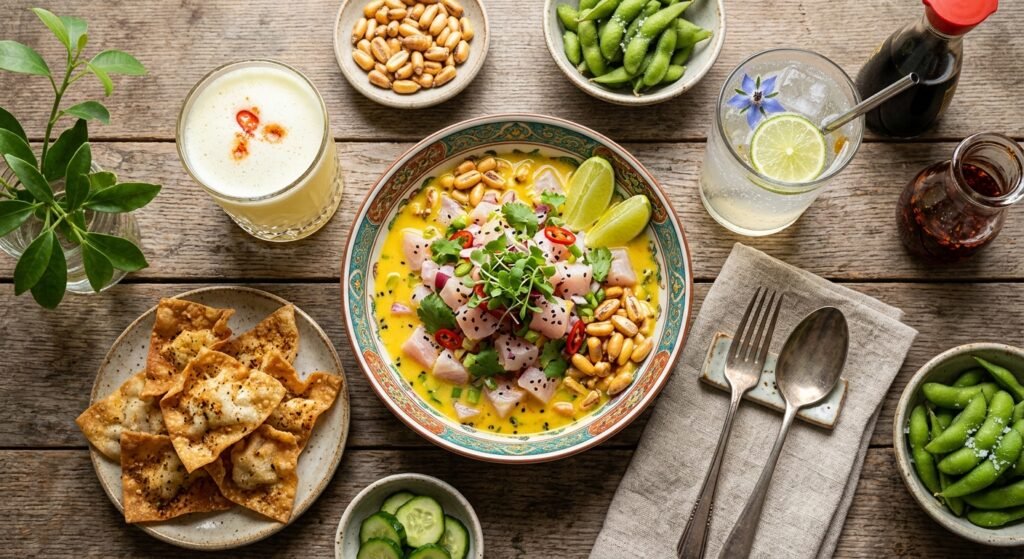
- Nikkei (Peruvian-Japanese): Fresh sashimis cured in bright citrus juices, seasoned with Andean chilies, cilantro, and toasted sesame.
- Chifa (Chinese-Peruvian): Stir-fried wok dishes like Lomo Saltado, blending Cantonese soy-based cooking with native South American peppers and potatoes.
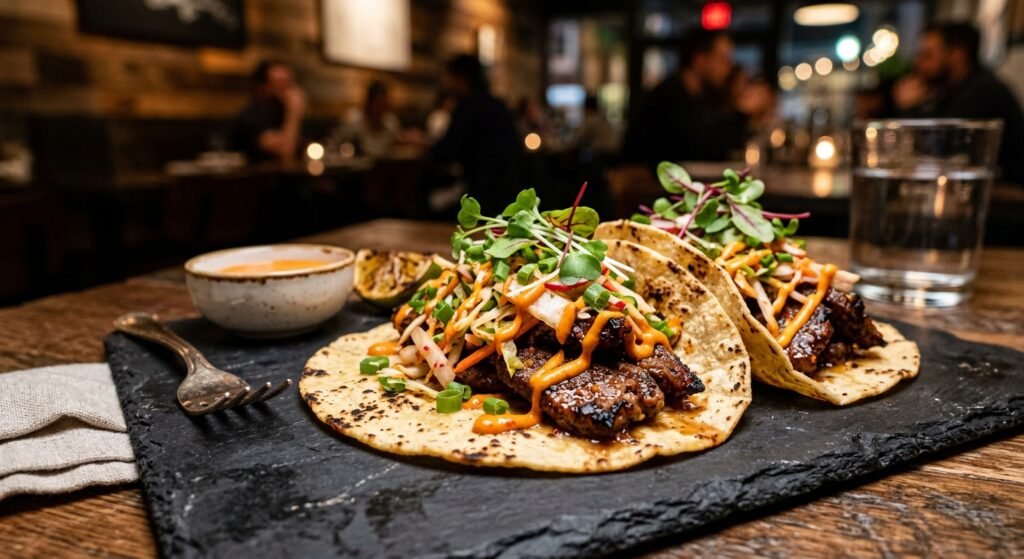
- Korean-Mexican: Slow-roasted bulgogi beef served on corn tortillas with fermented kimchi slaw and spicy crema.
For broader culinary context on global safety standards and food origin certifications, you can consult resources provided by [External Link: Visit the Food and Agriculture Organization (FAO) for insights on global food systems and heritage ingredients].
The Role of Local Sourcing in Fusion Food
A major factor fueling the rise of fusion cuisine at the neighborhood level is the farm-to-table movement. Local chefs do not merely import foreign goods; they actively adapt global recipes to highlight seasonal produce grown nearby.
When a chef uses locally harvested root vegetables in a traditional Indian curry or incorporates nearby dairy products into a French-Vietnamese pastry, the result honors both global heritage and local agriculture. This commitment to fresh, regional sourcing ensures that fusion menus remain sustainable, environmentally conscious, and deeply tied to the community.
Conclusion
The rise of fusion cuisine marks an exciting, ongoing chapter in global gastronomy. By breaking down geographic barriers and focusing on flavor synergy, local chefs are creating dining experiences that feel both refreshingly novel and comfortably familiar. As our global food culture continues to interconnectedly evolve, these creative culinary mashups will remain at the forefront of how we eat, celebrate, and connect over food.
Frequently Asked Questions (FAQs)
What is the primary cause behind the rise of fusion cuisine?
The primary drivers include global travel, multicultural urban populations, social media exposure, and innovative chefs seeking creative freedom beyond traditional regional recipes.
How does modern fusion cuisine differ from older culinary trends?
Modern fusion cuisine focuses heavily on authenticity, cultural storytelling, and technical balance, whereas earlier iterations often mixed contrasting ingredients without clear harmony or respect for heritage.
What are some popular examples of fusion food dishes?
Common examples include Korean bulgogi tacos, Japanese-Italian miso pasta, Vietnamese-French banh mi sandwiches, and Peruvian-Japanese Nikkei ceviche.